
Tytuł pozycji:
Planned Obsolescence: Metallurgical Degradation in the Global Lightbulb Cartel
- Tytuł:
- Planned Obsolescence: Metallurgical Degradation in the Global Lightbulb Cartel
- Autorzy:
- Kathy Chen
- Data publikacji:
- 2026
- Wydawca:
- epubli
- ISBN, ISSN:
- 9783565395200
- Dostawca treści:
- legimi
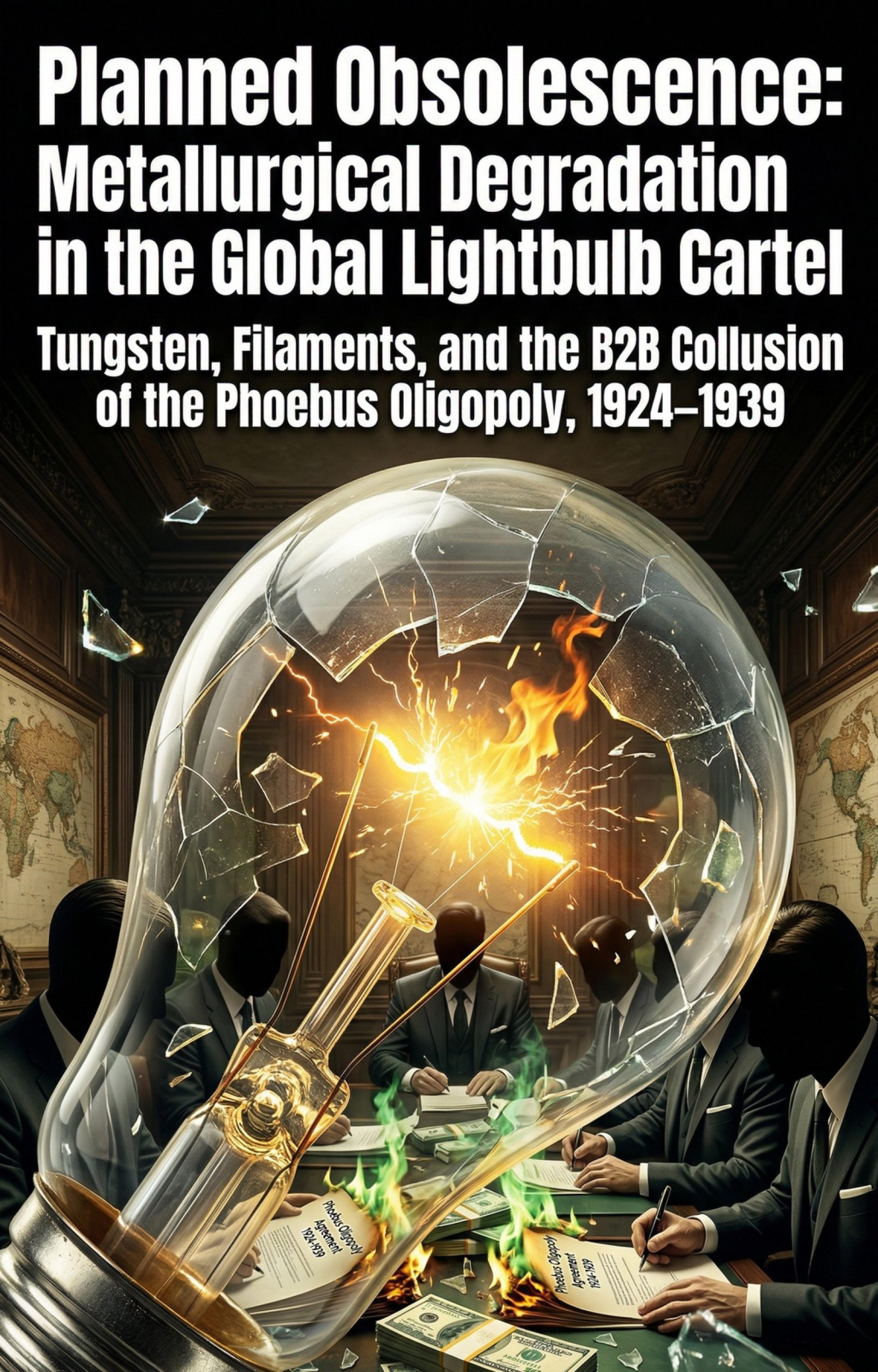
In the early 1920s, engineers perfected the incandescent lightbulb, creating tungsten filaments so durable they could theoretically burn for decades. For the executives running the world's largest lighting manufacturers, this technological triumph was an absolute financial disaster. If a product never breaks, the consumer only buys it once. To prevent the collapse of their recurring revenue, the major international players formed the Phoebus Cartel, a highly secretive oligopoly designed to deliberately degrade their own metallurgical engineering.
The cartel implemented strict, heavily policed manufacturing quotas, mandating that no lightbulb could burn for longer than 1,000 hours. Engineers were actively ordered to weaken the crystal structure of the tungsten filaments, designing them to snap after a precise duration of use. Companies that produced bulbs lasting too long were hit with massive financial fines by the cartel's Swiss arbitration board. This ruthless collusion established the toxic blueprint for the modern consumer economy.
Deconstruct the birth of deliberate industrial failure. Analyze the metallurgical sabotage and corporate price-fixing that forced humanity to repeatedly buy the exact same lightbulb.